Disclosure: This post contains affiliate links. If you make a purchase through these links, I may earn a small commission at no extra cost to you. I only recommend tools and plans I truly believe will help your greenhouse journey
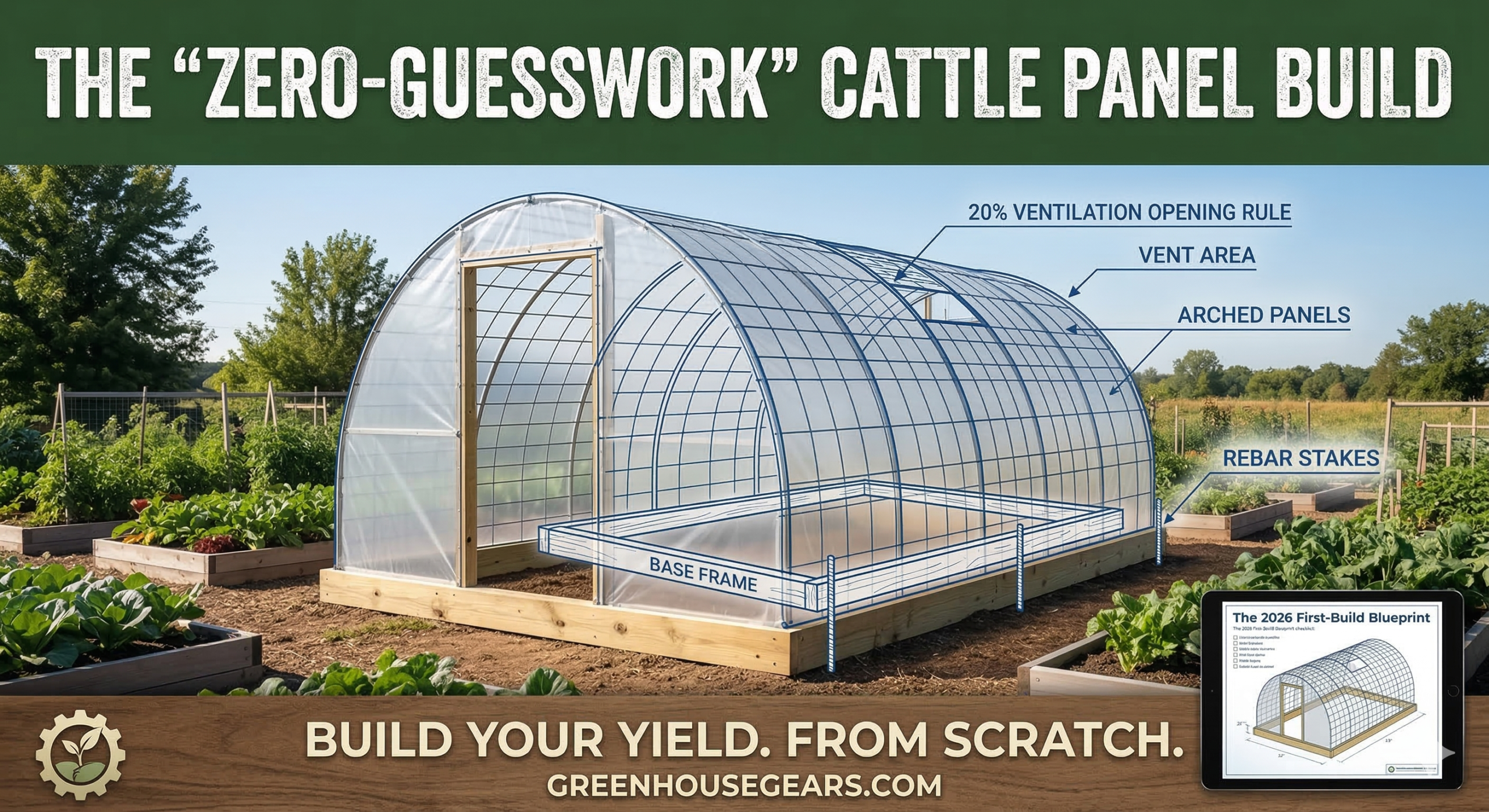
Fact: In 2026, the “Cattle Panel” design remains the #1 choice for homesteaders because it provides a 100+ sq. ft. growing space for under $500. Inference: Most failures occur because builders treat it like a “tent” rather than a structure. This guide focuses on Structural Integrity and Climate Resilience.
While this cattle panel method is great for beginners, if you want professional 3D diagrams and exact lumber cut lists, I recommend following these Master Greenhouse Blueprints.
1. The 2026 Decision Matrix: Why Cattle Panels?
A professional glass greenhouse in 2026 costs an average of $11,000. A DIY Cattle Panel build averages $350–$600.
- Durability: 4-gauge galvanized steel panels don’t rust or sag under snow.
- Scalability: You can extend an 8×12 build to 8×24 by simply adding more panels.
- Mobility: If built on a “skid” frame, the entire structure can be moved by a lawn tractor.
Note: To skip the manual math and see high-resolution versions of these Step-by-Step Plans, check out the full vault here.
2. The Comprehensive Materials Checklist
Prices based on March 2026 hardware averages.
The Skeleton
- (3-4) 16ft Cattle Panels (4-Gauge): ~$55/each.
- (4) 4×4 Pressure-Treated Posts (19” length): Corner anchors.
- (6) 2×6 Cedar or Pine Boards (12ft): The base perimeter.
- (10) 1/2” Rebar Stakes (2ft length): To prevent “splaying.”
The Glazing & Protection
- 6-Mil UV-Stabilized Polyethylene Film: Do not use 3-mil painter’s plastic; it will shatter in 3 months of UV exposure.
- Poly-Pipe Foam Insulation: To cover the metal edges of the panels so they don’t tear the plastic.
- Wiggle Wire & Lock Channels: The professional way to secure plastic against 50mph winds.
3. Step-by-Step Construction (Precision-Fit Guide)
Phase 1: The Foundation & “Anti-Splay” Frame
- Level the Ground: A 1-inch slope can cause the cattle panel arch to “torpedo” or lean.
- Build the Box: Use your 2×6 boards to create an 8′ x 12′ rectangle. Secure the corners with the 4×4 posts.
- The Rebar Secret: Drive rebar stakes every 3 feet along the inside of the long boards. This acts as a “track” for the panels.
Phase 2: Arched Rib Installation
Note: This is a two-person job.
- The Tension Fit: Bend the 16ft panel into a “U” shape and tuck the ends inside your wooden frame, resting against the rebar.
- Secure: Use Galvanized Fence Staples (U-nails) to anchor the panel to the wood. Strategic Audit: Do not drive them all the way in; leave a 1/8″ gap to allow the metal to expand/contract with the temperature.
- Zip-Tie the Seams: Where panels meet, use UV-Stabilized heavy-duty zip ties every 6 inches.
Phase 3: The 20% Ventilation Rule
Fact: 2026 gardening research shows that the vent area must equal 20% of your floor area. In an 8×12 greenhouse, you need ~19 sq. ft. of opening.
- The Solution: Install a door at the front and a large “swing-out” window at the back.
- Pro Tip: Use Solar-Powered Auto-Vent Openers. These use wax cylinders that expand at 75°F to open your windows automatically—no electricity required.
4. The Critical ‘Pro’ Gap
While this guide gets your frame standing, the internal layout (shelving, irrigation, and heat sinks) is what determines if your plants actually survive the winter.
Most “free” plans stop at the frame. If you want a complete library of 3D diagrams for 15 different greenhouse styles, including specialized “Heavy Snow” variants, I highly recommend checking out the Master Greenhouse Blueprints.
Why I recommend this: It includes a “Material Optimization” list that usually saves builders about $140 in wasted lumber cuts—paying for itself on Day 1.
5. Maintenance & Winterizing
- Check the “Wiggle”: Every autumn, ensure your wiggle wire is tight. Loose plastic vibrates in the wind, creating “heat friction” that weakens the film.
- Clear the Snow: Cattle panels are strong, but a “Wet Heavy” snow load (3+ inches) should be swept off to prevent the wood base from bowing.
Ready to build more? You can access 7,000+ Greenhouse & Woodworking Plans to turn your backyard into a professional homestead.